Hays County
San Marcos, TX
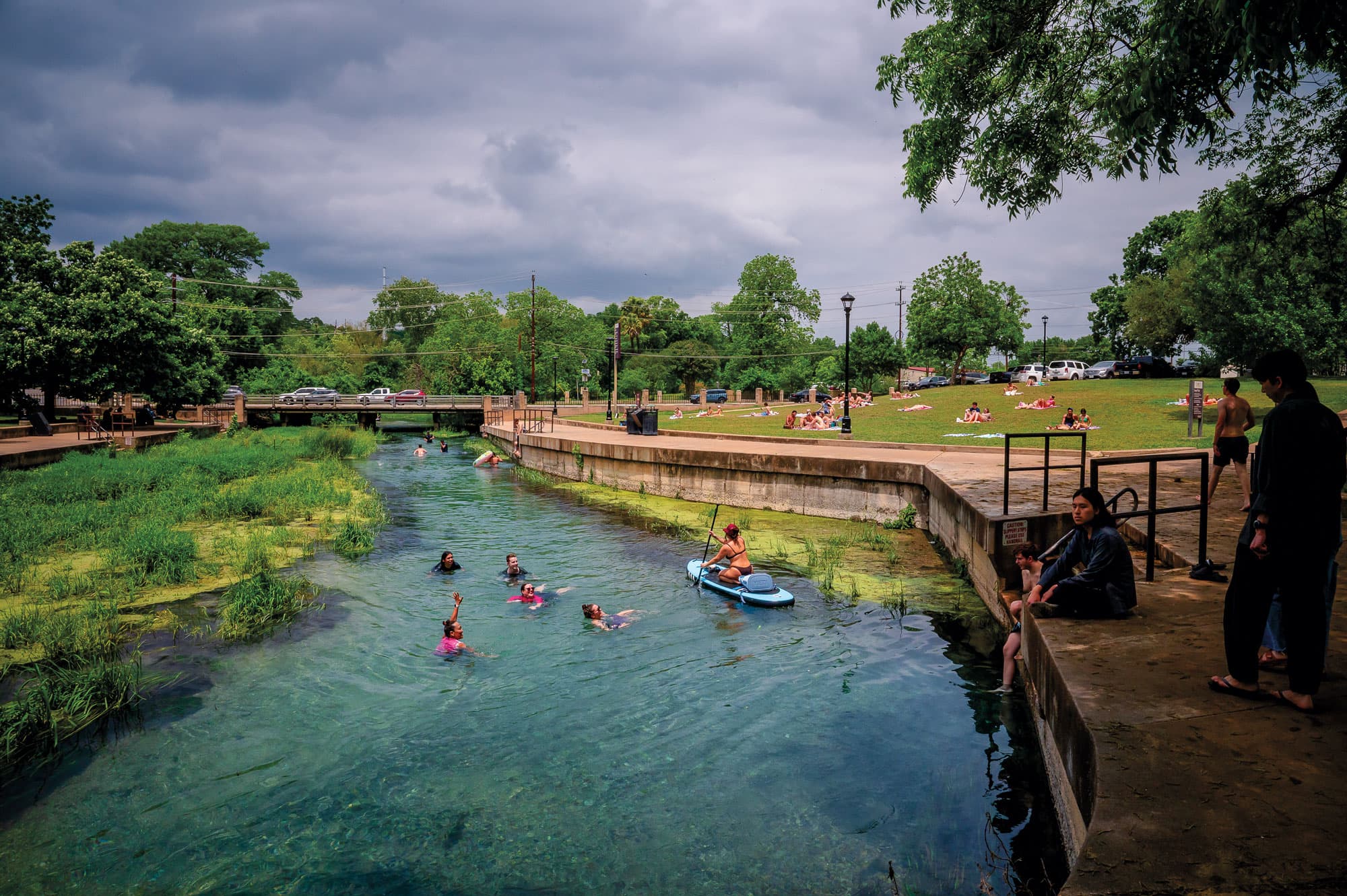
San Marcos is the Hays County seat and home to Texas State University with roughly 40,000 students, which creates layered commercial and industrial demand that ranges from student-rental infill and production-builder support to large-scale distribution and warehouse construction along I-35. The San Marcos River, Aquarena Center, and San Marcos Premium Outlets generate hospitality-adjacent commercial needs, while Logistics Park 35 and the Highway 80, Ranch Road 12, and Highway 123 corridors draw industrial owner-users and distribution operators who need reliable freight movement and room to scale. The Edwards Aquifer Recharge Zone runs through the western and southern portions of Hays County, meaning that karst geology and thin caliche soils are a real site condition for projects located in or near those recharge zones—not a theoretical concern.
View market pageHays County
Kyle, TX
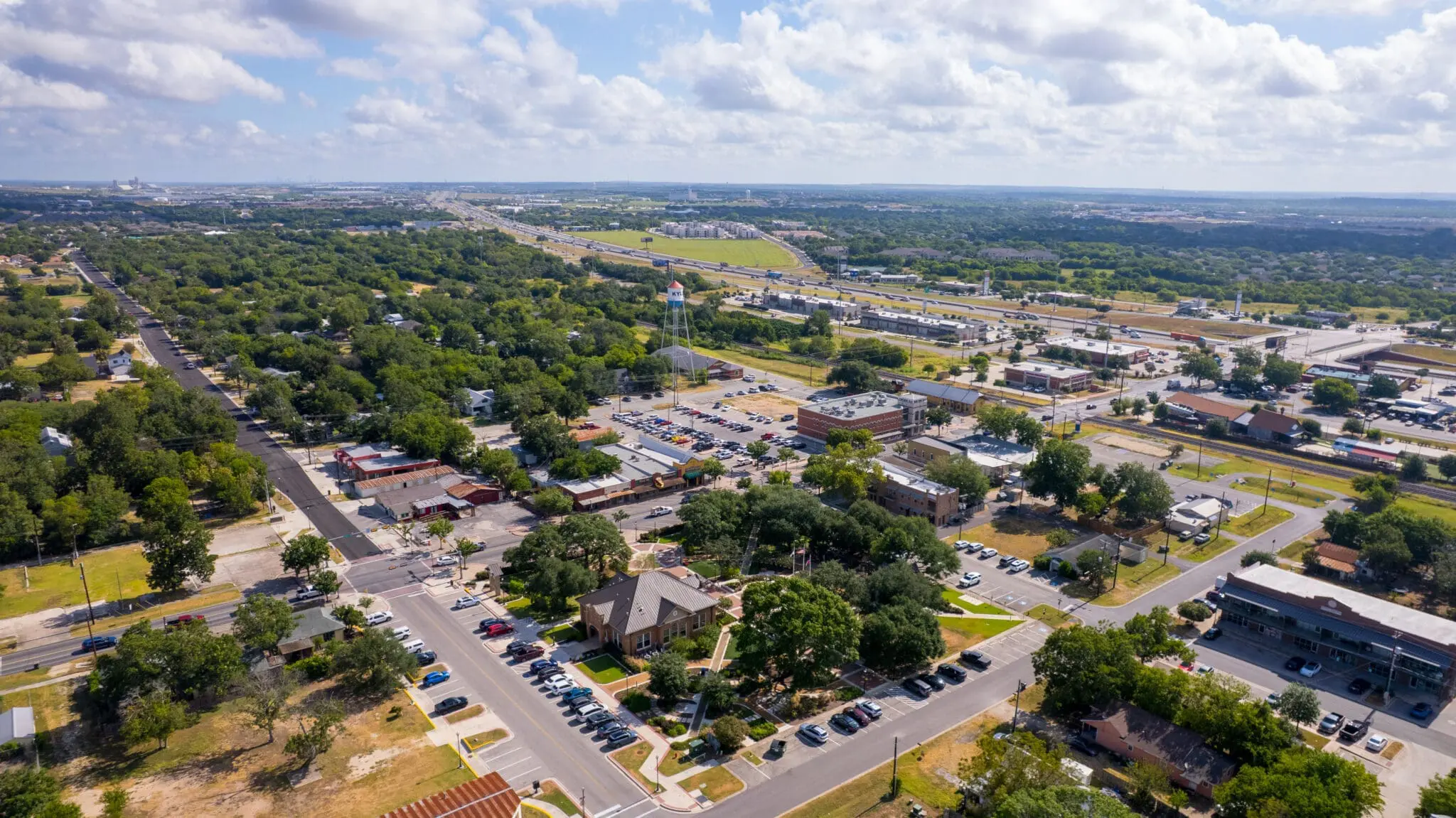
Kyle is one of the fastest-growing cities in Texas, with a population that has more than doubled over the past decade driven by production-builder residential growth along the I-35 and FM 150 corridors. That residential expansion creates sustained demand for commercial support buildings—neighborhood retail, service centers, medical and professional office, and flex industrial facilities serving the population base—as well as owner-user warehouse and operations buildings from businesses relocating out of higher-cost Austin markets. The Kyle Marketplace, Plum Creek, and Crossroads Park corridors have become active retail and commercial development zones, while the city's industrial parks attract distribution and light manufacturing operators who need I-35 access with lower land costs than Buda or South Austin.
View market pageHays County
Buda, TX
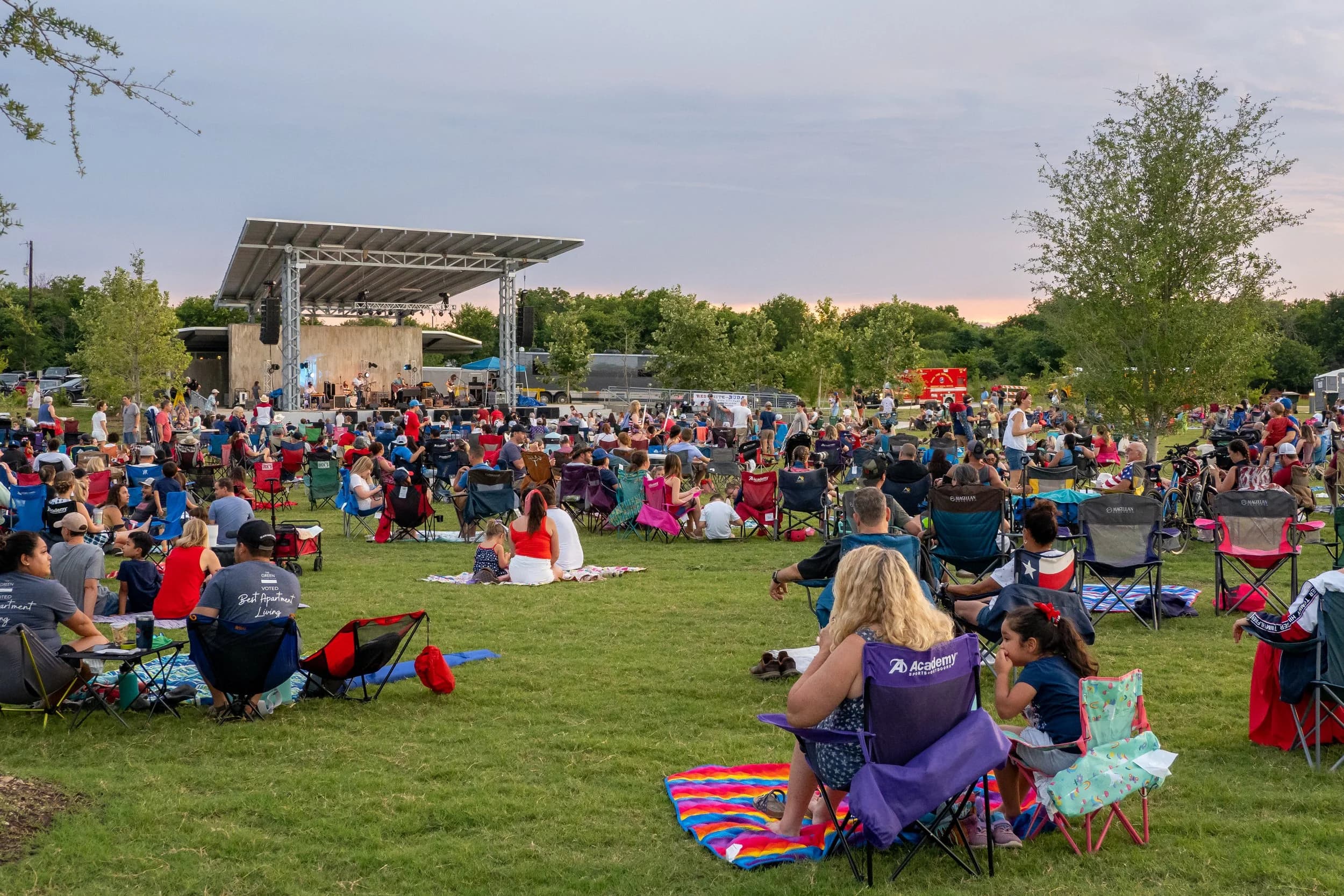
Buda functions as a commercial and industrial gateway where South Austin proximity, direct I-35 frontage, and a lower land-cost profile combine to make it one of the most active owner-user and light industrial development markets in the Hays County corridor. The Cabela's and outlet retail corridor along I-35 anchors a broader commercial zone that includes service retail, auto-oriented commercial, and hospitality, while the Buda Industrial Park and surrounding parcels draw warehouse operators, fabrication shops, and distribution users who need freight access without downtown Austin delivery constraints. The city's population has grown substantially as residential development spreads south from Austin, which sustains demand for neighborhood commercial, medical services, and community-serving anchor tenants.
View market pageComal County
New Braunfels, TX
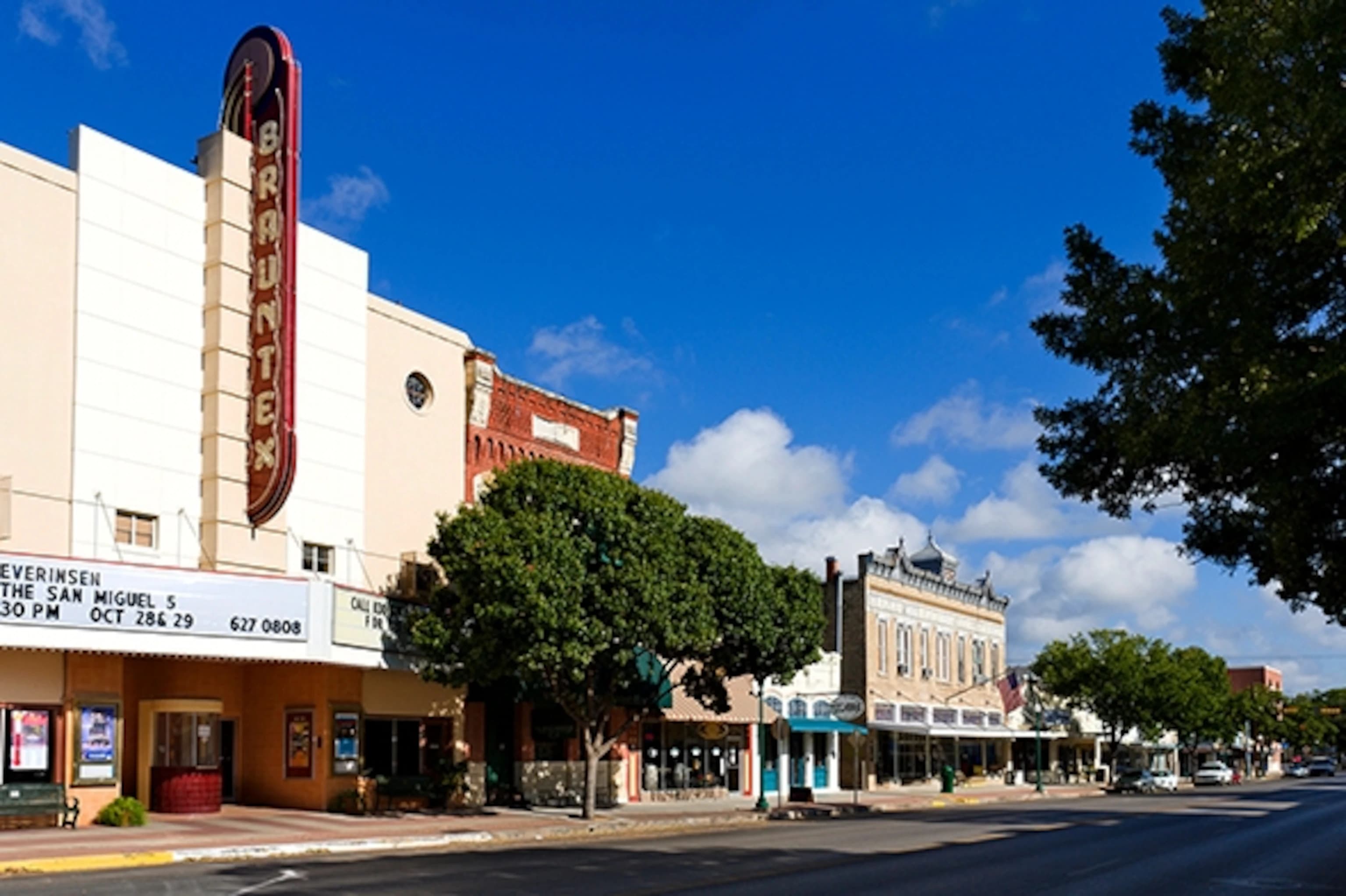
New Braunfels is one of the fastest-growing cities in the United States, with a commercial and industrial construction market shaped by I-35 corridor freight demand, a booming tourism economy anchored by Schlitterbahn and the Guadalupe River float trade, and sustained retail absorption from a residential base that has expanded dramatically along FM 306, Loop 337, and the Common Street corridor. The city's position at the convergence of the I-35 and I-10 corridors makes it a legitimate logistics node, while the Dry Comal Creek and Comal Springs watershed makes stormwater management a real engineering variable on many parcels. German Hill Country heritage architecture and active downtown New Braunfels design standards create public-facing quality expectations that differ from a generic big-box corridor.
View market pageGuadalupe County
Seguin, TX
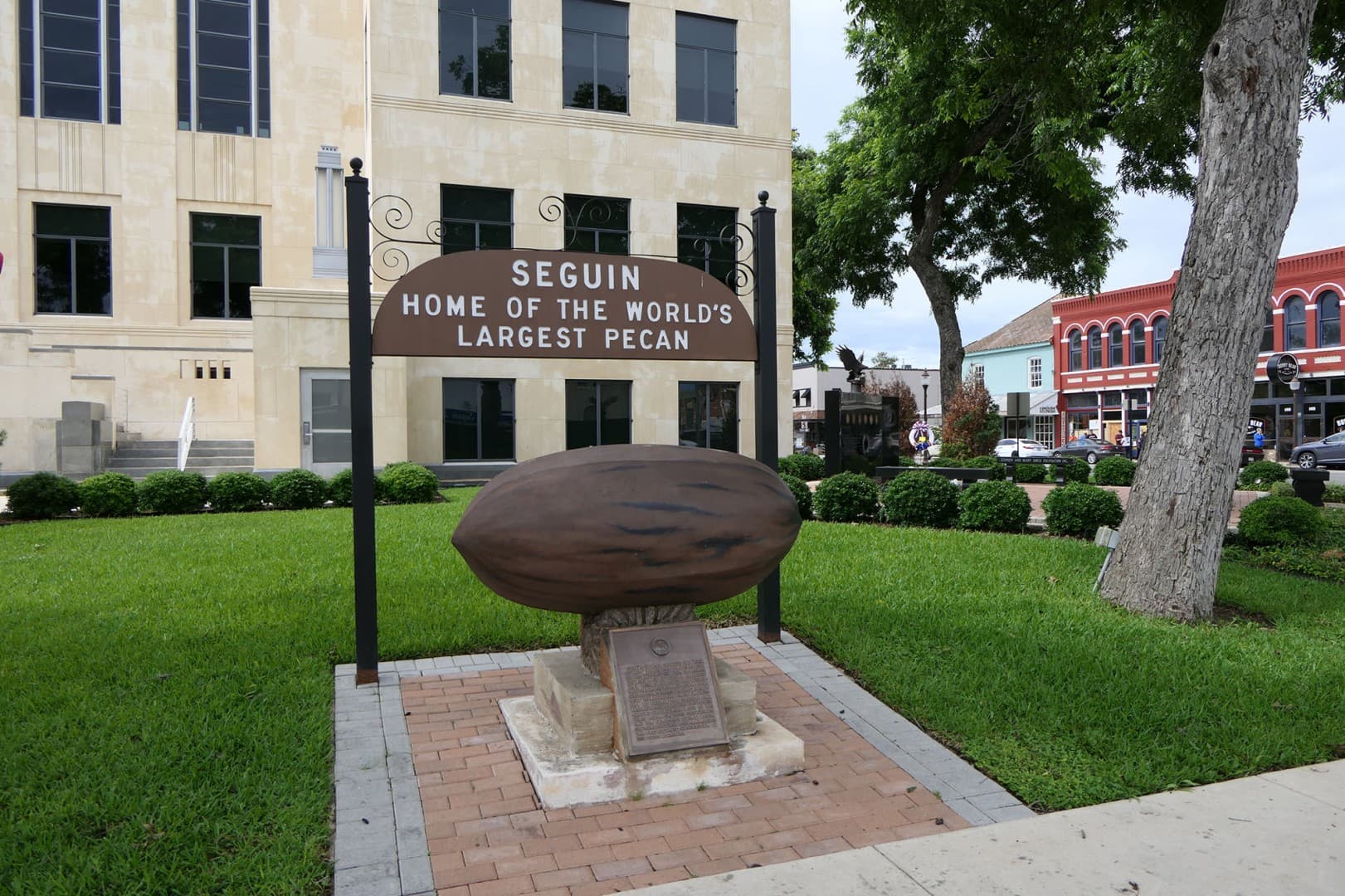
Seguin is Guadalupe County's industrial anchor, positioned on the US Highway 90 and US Highway 123 corridors between San Marcos to the west and Gonzales to the east, with a manufacturing and warehousing economy that includes legacy employers in automotive components, food processing, and industrial fabrication alongside newer distribution and logistics operations. The city's industrial parks along Highway 90 and the Seguin Development Corporation's active incentive programs have kept industrial land absorption consistent, and the parcel inventory in Seguin can accommodate heavy operational users that need large-bay buildings, substantial outdoor storage, truck-dock infrastructure, and yard geometry that smaller urban sites cannot provide. The Guadalupe River and Walnut Springs watersheds run through the area, creating drainage management requirements that affect grading and stormwater design on larger parcels.
View market pageCaldwell County
Lockhart, TX
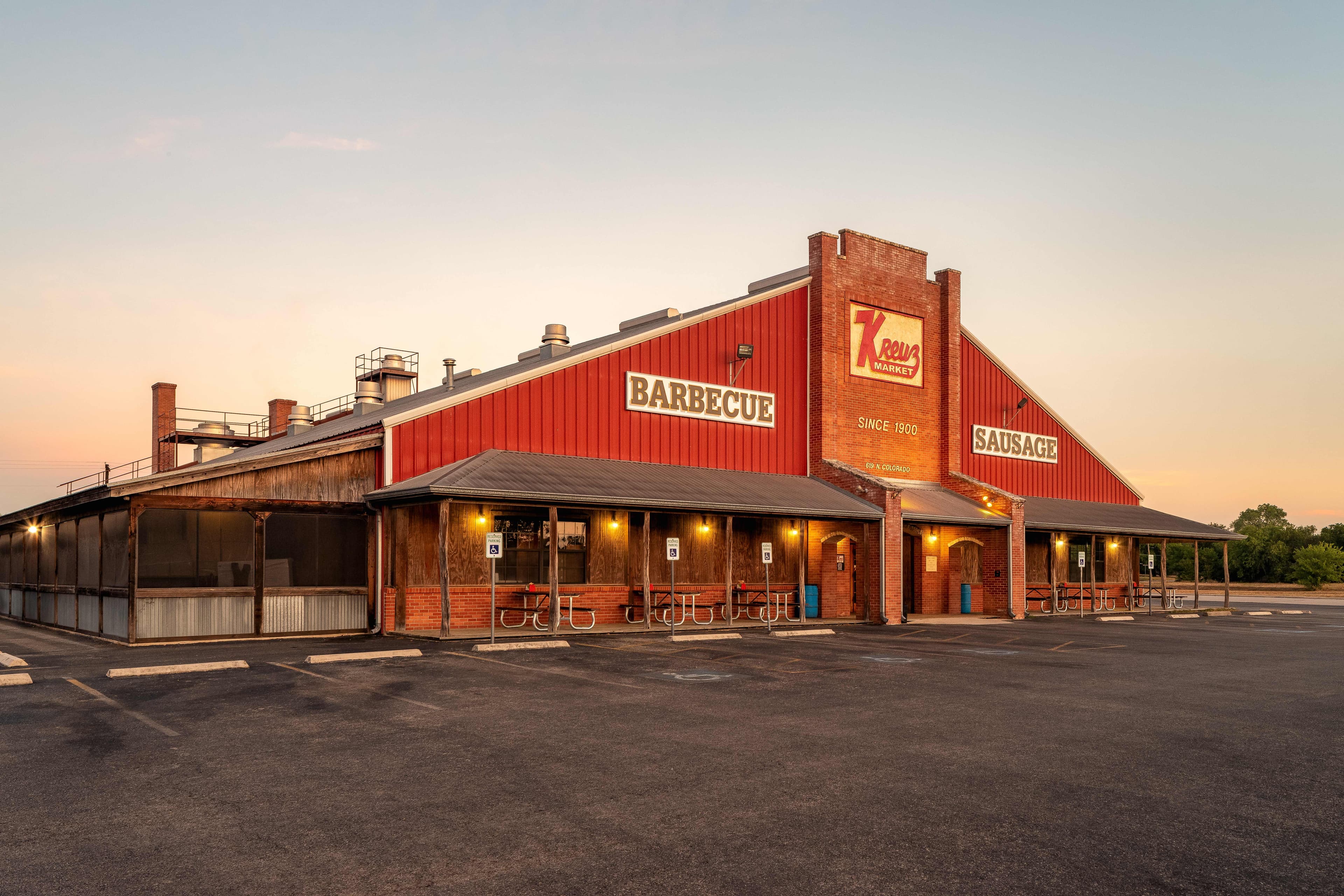
Lockhart is the Caldwell County seat and has built an identity beyond its barbecue fame as an emerging industrial and commercial market benefiting from spillover growth from the San Marcos and Austin-south corridor. The city sits at the intersection of US Highway 183 and State Highway 142, with additional access via State Highway 130 to the west, giving industrial users practical freight routes without the congestion and land-cost premiums of the I-35 corridor. Lockhart's industrial parks and the Caldwell County economic development pipeline have attracted food processing, light manufacturing, warehouse, and distribution operators who value the city's flat topography, available utilities, and lower operating costs relative to more urbanized Hays County markets.
View market pageHays County
Wimberley, TX
Wimberley is a Hill Country community in the cypress-lined Blanco River watershed where tourism, second-home investment, and a growing full-time residential base generate commercial construction demand that is distinct from the I-35 corridor markets to the east. The Square at Wimberley, Ranch Road 12, and FM 3237 corridors support specialty retail, art galleries, dining, and lodging-adjacent commercial uses that require public-facing architectural quality and sensitive site integration. The Edwards Aquifer Recharge Zone and Trinity Aquifer contribute groundwater that the surrounding area depends on, which means impervious cover limits, karst-sensitive grading, and stormwater management are regulatory realities on most development sites. Owner-users building operations centers, event venues, or specialty commercial properties find that Wimberley's character demands a higher level of site planning discipline than a comparable project on a flat I-35 industrial parcel.
View market pageHays County
Dripping Springs, TX
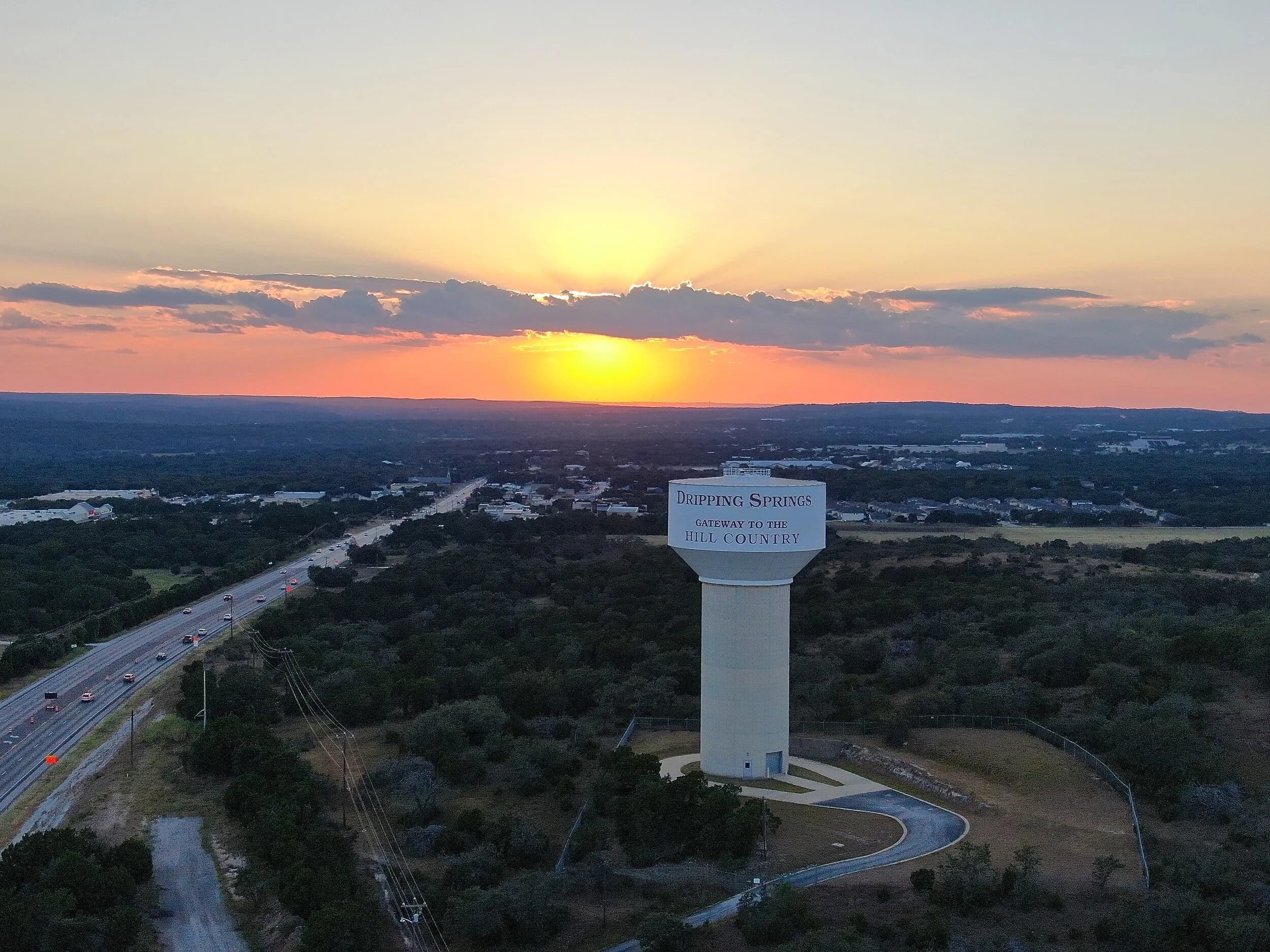
Dripping Springs has evolved from a quiet Hill Country gateway into one of the fastest-growing communities in Hays County, with a retail corridor along US Highway 290 that now includes regional grocery anchors, medical facilities, restaurant pads, and professional service buildings. The city's designation as the Wedding Capital of Texas and its concentration of craft distilleries, breweries, and event venues also generate a sustained layer of hospitality-adjacent construction demand. Westward growth from Austin's Oak Hill and Southwest Austin neighborhoods has made the US 290 corridor a genuine commercial development market rather than a convenience stop, while the surrounding Hill Country terrain and the Edwards Aquifer Recharge Zone impose site constraints that require more planning discipline than a flat urban parcel.
View market pageTravis County
Austin, TX
Austin remains the region's highest-pressure market for commercial and industrial projects that need disciplined scheduling and clear field control.
View market pageWilliamson County
Round Rock, TX
Round Rock combines strong commercial demand with expanding industrial and owner-user needs along a mature infrastructure corridor.
View market pageTravis County
Pflugerville, TX
Pflugerville supports fast-moving commercial and industrial projects tied to metro growth and owner-user demand.
View market pageWilliamson County
Georgetown, TX
Georgetown offers a strong mix of commercial expansion, owner-user development, and support facilities for a growing regional population.
View market pageWilliamson County
Cedar Park, TX
Cedar Park supports commercial and owner-user development where public-facing quality and strong site planning are both essential.
View market pageWilliamson County
Leander, TX
Leander continues to grow as a commercial and owner-user market needing flexible buildings and disciplined site execution.
View market pageWilliamson County
Hutto, TX
Hutto supports industrial support, owner-user, and commercial growth where site and utility planning remain critical.
View market pageWilliamson County
Taylor, TX
Taylor has become a high-interest industrial and infrastructure market where utility, schedule, and site control are major priorities.
View market pageTravis County
Manor, TX
Manor supports corridor-adjacent commercial and industrial projects that benefit from metro access and simpler parcel geometry.
View market pageBastrop County
Bastrop, TX
Bastrop supports owner-user, industrial support, and commercial projects that need durable site planning and room for growth.
View market pageCaldwell County
Luling, TX
Luling sits on the US Highway 90 corridor in eastern Caldwell County, roughly equidistant from Seguin, Gonzales, and the San Marcos metro, and its construction market is shaped by oil and gas service operations, agricultural support, industrial storage, and practical owner-user building programs that prioritize operational durability over architectural finish. The city's oil derrick monuments reflect an energy service economy that generates demand for large-bay maintenance shops, parts and equipment storage buildings, and operations compounds that need substantial paved yard area and durable site surfaces. Highway 90 commercial development serves the local population with retail, restaurant, and service-commercial buildings that function as the commercial spine of the southern Caldwell County rural area.
View market pageGonzales County
Gonzales, TX
Gonzales supports industrial support, commercial owner-user, and infrastructure-connected projects that benefit from practical delivery planning.
View market pageComal County
Canyon Lake, TX
Canyon Lake projects tend to be owner-user, support, and specialized commercial developments where site integration matters.
View market pageGuadalupe County
Schertz, TX
Schertz is a strong logistics and industrial support market with direct relevance to owner-user and freight-oriented development.
View market pageGuadalupe County
Cibolo, TX
Cibolo supports owner-user, support-commercial, and corridor-linked industrial projects that need disciplined site planning.
View market pageBexar County
Converse, TX
Converse provides a practical market for support-commercial, industrial, and logistics-adjacent building programs.
View market pageBexar County
Universal City, TX
Universal City supports commercial and operational facilities that need strong site planning and reliable turnover control.
View market pageBexar County
Live Oak, TX
Live Oak supports corridor-oriented commercial and industrial projects that need practical site and circulation planning.
View market pageBexar County
Selma, TX
Selma remains a practical market for support-commercial, logistics-adjacent, and owner-user projects along the corridor.
View market pageBexar County
San Antonio, TX
San Antonio is a major commercial and industrial market requiring disciplined preconstruction, field coordination, and reliable turnover planning.
View market pageKendall County
Boerne, TX
Boerne supports high-quality owner-user, commercial, and support-building projects where site character and execution discipline both matter.
View market pageComal County
Bulverde, TX
Bulverde supports owner-user, support-commercial, and specialized facilities that need site-sensitive planning and durable execution.
View market pageComal County
Spring Branch, TX
Spring Branch supports owner-user, support-industrial, and specialized commercial projects where site planning drives long-term value.
View market pageWilson County
Floresville, TX
Floresville supports practical industrial support, storage, and owner-user projects that depend on disciplined site logistics.
View market pageWilson County
La Vernia, TX
La Vernia supports owner-user, support-industrial, and practical commercial developments where site performance matters more than flash.
View market pageBlanco County
Blanco, TX
Blanco projects tend toward owner-user, support-commercial, and specialized facilities where careful site placement matters.
View market pageTravis County
Bee Cave, TX
Bee Cave supports premium commercial and owner-user projects where public-facing quality and disciplined execution are equally important.
View market pageTravis County
Lakeway, TX
Lakeway supports polished owner-user, office, and service-commercial projects where turnover quality is a major differentiator.
View market pageCaldwell County
Maxwell, TX
Maxwell is a small rural community in central Caldwell County on the FM 1984 and FM 2001 corridors southeast of San Marcos, where agricultural operations, acreage-based owner-user development, and rural industrial support represent the primary construction demand. The community's proximity to Lockhart and San Marcos gives it practical freight connectivity while maintaining the lower land costs and rural parcel availability that attract agricultural service, storage, and operations-compound users who need more acreage than urban industrial parks provide. Maxwell and the surrounding Caldwell County rural area have seen modest growth spillover from the San Marcos expansion, with some rural residential development and small commercial investment along the county road system.
View market pageCaldwell County
Martindale, TX
Martindale is a small community on the San Marcos River in northern Caldwell County, positioned on State Highway 80 between San Marcos to the northwest and Luling to the southeast. The community's riverfront character and proximity to San Marcos have made it a destination for outdoor recreation-adjacent commercial investment, event venue development, and tubing-support commercial operations along the river corridor. Its position on Highway 80 also gives it a modest commercial corridor role for the surrounding rural Caldwell County population, with small retail, auto-oriented commercial, and service-commercial buildings serving local residents who are oriented toward Martindale rather than driving to San Marcos or Lockhart.
View market pageComal County
Garden Ridge, TX
Garden Ridge is a small incorporated city in Comal County on the northeastern edge of the San Antonio metro, positioned between Schertz and New Braunfels along the I-35 corridor, with a primarily residential character and limited commercial development that nevertheless generates owner-user, support-commercial, and civic facility construction demand. The community's location within one of the fastest-growing parts of the San Antonio-to-Austin corridor gives commercial projects here access to a large and affluent residential customer base while maintaining lower land costs and less competitive permit environments than San Antonio's near-northeast markets. Comal County's commercial development pipeline and the I-35 corridor's continued expansion create ongoing opportunities for support-commercial, light industrial, and owner-user building programs in and near Garden Ridge.
View market page